BY XAVIER GARCIA
In the crucible of indie filmmaking, how does one weave the fabric of authenticity for historical fiction when the very resources of that era are elusive and the budget constraints loom large? The alchemy of transcending these constraints begins, or is at least grappled with initially, within the research leading to the script. The pivotal remedy, ultimately, relies on the profound understanding of the subject matter by the writer.
Robert McKee, often acclaimed as “The God of Story,” has inscribed within his storytelling commandments the imperative: “THOU SHALT HAVE A GOD-LIKE KNOWLEDGE OF YOUR UNIVERSE.” And he is absolutely correct. Writing demands not only a deep comprehension of your story world but also an intimate understanding of your audience’s contemporary multifaceted social landscape. Without this, there’s a risk of merely reproducing the plethora of stories and cinematic experiences stored in the mind, leading to a page that’s nothing more than slightly rephrased clichés. Moreover, it jeopardizes the trance-like connection forged in the darkened theater or living room between the audience and a good story, well told.
The war on cliches is won with research. You can’t write what you don’t know and certainly can’t write what you don’t understand. Therefore, the genesis of creating authentic historical entertainment lies in the work put toward gathering both knowledge and wisdom prior to your first written word.
Today’s twenty-first-century audience consumes an abundance of stories; a ton. As a result, they have grown savvy, discerning, and selective. If you’re writing in 2023 with the goal of creating a nineteenth-century drama, you must bear in mind that your audience has already watched The Gilded Age, 1883, Anne With An E, The Alienist, Bridgerton, The Empress, Underground, Dickinson, Deadwood, and those are just a few of what’s available. Your audience knows the 1800s better than you do. If, as a writer, you stray too far from historicity, the movie-going audience will call you out on it. And that’s just the general public, significantly more forgiving than your chairside “historians.”
So what happens in the viewer’s mind if you don’t at least meet their historical understanding of the times? If a historical film deviates too much from historical accuracy or at least the audience’s expectations of their perceived accuracy, it risks being rejected or dismissed from the category or genre it intends to belong to. In other words, the audience may no longer consider it a valid representation of the historical genre due to perceived inaccuracies or deviations from apprehended historical truths.
Unfortunately, I believe this is a major reason why we’re seeing more and more film projects turning to the security and foundation provided by long-established and successful intellectual properties. And therefore, while navigating the challenges of historical accuracy and meeting audience expectations is crucial, it is within the realm of crafting a compelling story that these considerations find their synthesis, echoing Aristotle’s timeless wisdom in Poetics.
You see, in his work Poetics, Aristotle articulates that the purpose of staging a tragedy is to evoke the emotions of “pity and fear, leading to the catharsis of such feelings.” Over time, this notion has been interpreted by many writers to suggest that at the conclusion of a narrative, the audience should sense a gratifying escape from reality, akin to a two-hour journey of emotional purging. However, STORY is much more than that. A well-crafted tale, masterfully unfolded will carry themes and messages; it will establish and teach patterns of conflict and resolution; it provides historical perspective and generates empathy; it satisfies our appetite for the exploration of space and time; it is artistic expression; it creates intrigue and curiosity for the unknown, and ultimately, yes, it’s for entertainment.
Story builds culture. Culture is religion lived outwardly. Therefore, the stories we gravitate toward reflect the beliefs we uphold. But the process of writing is never black and white. Writers often grapple with the challenge of staying true to their authentic voice while simultaneously earning a livelihood.
This delicate balance is the essence of the craft—finding equilibrium between accuracy, authenticity, sellability, and sensibility. And the perfect balance is hardly ever achieved. Not in the writing phase when it’s a single creative steering the story, and often not even during filming or post production when the story is influenced by countless creatives each reshaping the narrative while executives build its marketing and global appeal.
Our short film proof-of-concept GOOD: The Examination of an Accused Witch serves as a tangible illustration of the principles discussed; grappling with the complexities of historical accuracy, audience engagement, and storytelling innovation. The full story of this film takes us on a gripping journey following Callum Hughes, a character surviving his own execution in seventeenth-century Scotland, only to find himself shipwrecked, seven years later, in Salem, Massachusetts, during the notorious witch trials of 1692. However, the challenge was to create a short film proof-of-concept (POC) that not only sold the story but also introduced a unique use of immersive VR technology. As a POC, our short film needed to intricately weave historical accuracy into its narrative fabric, balancing the demands of a selective twenty-first-century audience with the complexities of producing a compelling period piece. The goal was for the short film to not only explore the untrodden paths of the seventeenth century but also set the stage for a promising six-part series delving into the intricate interplay of historical events and fictional characters.
To make the POC productive for our long-term goals, we had to accomplish a myriad of objectives, chief among those being to craft a compelling and marketable world. Afterall, this POC was to be our calling card: a very small appetizer meant to sell you on a giant dinner party experience. Juggling these objectives was challenging, but that’s the fun of it.
And in an effort to balance these objectives, we had countless conversations and pitches with historical experts and industry colleagues. In those talks we gauged their reactions to the historical elements and the fictional aspects as well. Did they question inserted fictional moments, or did they accept them as truth because they were hooked on the narrative? Were they confused about the plot? Or were they amused and connected? Did they hang at the edge of their seats and ask “and then what happened” or lean in to know what’s next? If so, we knew we were on the right track. At which point we’d go back to the drawing board and adjust accordingly as we approached filming day. And that’s what storytelling is all about.
Our goal for GOOD was to uncover those subtle, often overlooked moments in history—what we refer to as “quiet moments”—which, though history may not emphasize, played a silent yet influential role. In the film, these quiet moments are brought to life through the lens of our fictional characters, revealing their impact on significant historical events. And I believe, something that has worked in our favor is that the seventeenth century is slightly underrepresented in film. While there are classics like Nicholas Hytner’s The Crucible and Terence Malick’s The New World, and certainly various great books and plays, larger budget film projects in this era are hard to come by when the more dynamic eighteenth century is just around the corner. I think this offers a great opportunity for exploration.
The late 1600s certainly aren’t devoid of extraordinary events that make for excellent dramas. New England’s witch hysteria is just a sliver of the history one can play with when crafting settings and world-building for historical pieces set in this time frame. In fact, it was thoroughly enjoyable to delve into the historical complexities at the end of King Charles II’s reign and the implications his death had on the relationship between England and Scotland. All sorts of interesting conflicts arise from the religious tensions between the Anglican and Presbyterian churches and the underground Quaker movements at this time. Tracking this across the pond to the New England colonies, from the history and legacy of the 1620 pilgrims to the prominent Puritan establishments in 1692 Salem Village, reveals great inspirations for sources and forces of antagonism against your story’s overall trajectory.
From institutional forces of antagonism to internal and personal psychological antagonism due to culture or the stresses of such a rigid way of life, the tapestry for the perfect storm of events leading to the execution of nineteen people in 1692 really begins to take shape. Reading some of Samuel Parris’ sermons has been particularly illuminating. It exposes the fickleness and flaws of humanity despite their dogmatic religious convictions. The flesh just manages to carve through all the pious posturing when life and death hang in the balance. These bits of information gleaned from personal correspondences, sermons, journals, or even financial ledgers of the time provide the proper informational backdrop to build compelling conflict, tension, and antagonism in these historical narratives.
In envisioning the future, our aspiration is to transform GOOD: The Examination of an Accused Witch into a captivating six-part series. This series will meticulously follow the fictional journey of Callum Hughes, navigating from East Lothian, Scotland, surviving his own execution amidst the fervor of magistrates purging the land of sorcery. His fate takes an unexpected turn as he finds himself shipwrecked on the tumultuous shores of Salem, Massachusetts, in the height of the infamous witch trials. The potential of this series lies not only in Callum’s gripping story but also in the exploration of significant historical events—from the Seven Ill Years in Scotland to the profound psychological aftermath of King Philip’s War in New England. Our excitement stems from the prospect of delving into this uncharted period, unearthing the wild and untold stories that unfolded in this historical tapestry. As we embark on this creative journey, our goal is to bring to life the intricacies and complexities of the seventeenth century, inviting audiences to witness the unexplored chapters of history that lie between the lines.
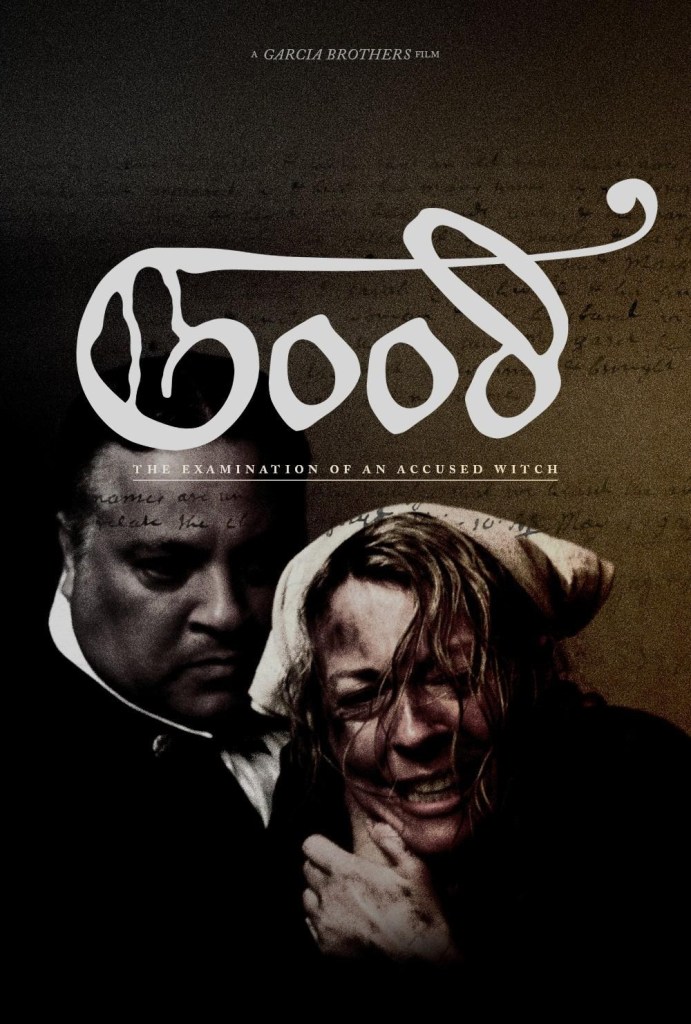
Short Film Proof-of-Concept
GOOD: The Examination of an Accused Witch
Written By: Xavier Garcia and Jonathan Garcia
Producer / Director: Xavier Garcia
Director of Photography: Jonathan Garcia
IMDb: https://www.imdb.com/title/tt29415340/
Facebook: https://www.facebook.com/ExaminationofSarahGood
Website: www.MountHarvest.com
IG: @Xav.Gar
IG: @JonathanHarvest
[mc4wp_form id="5878"]